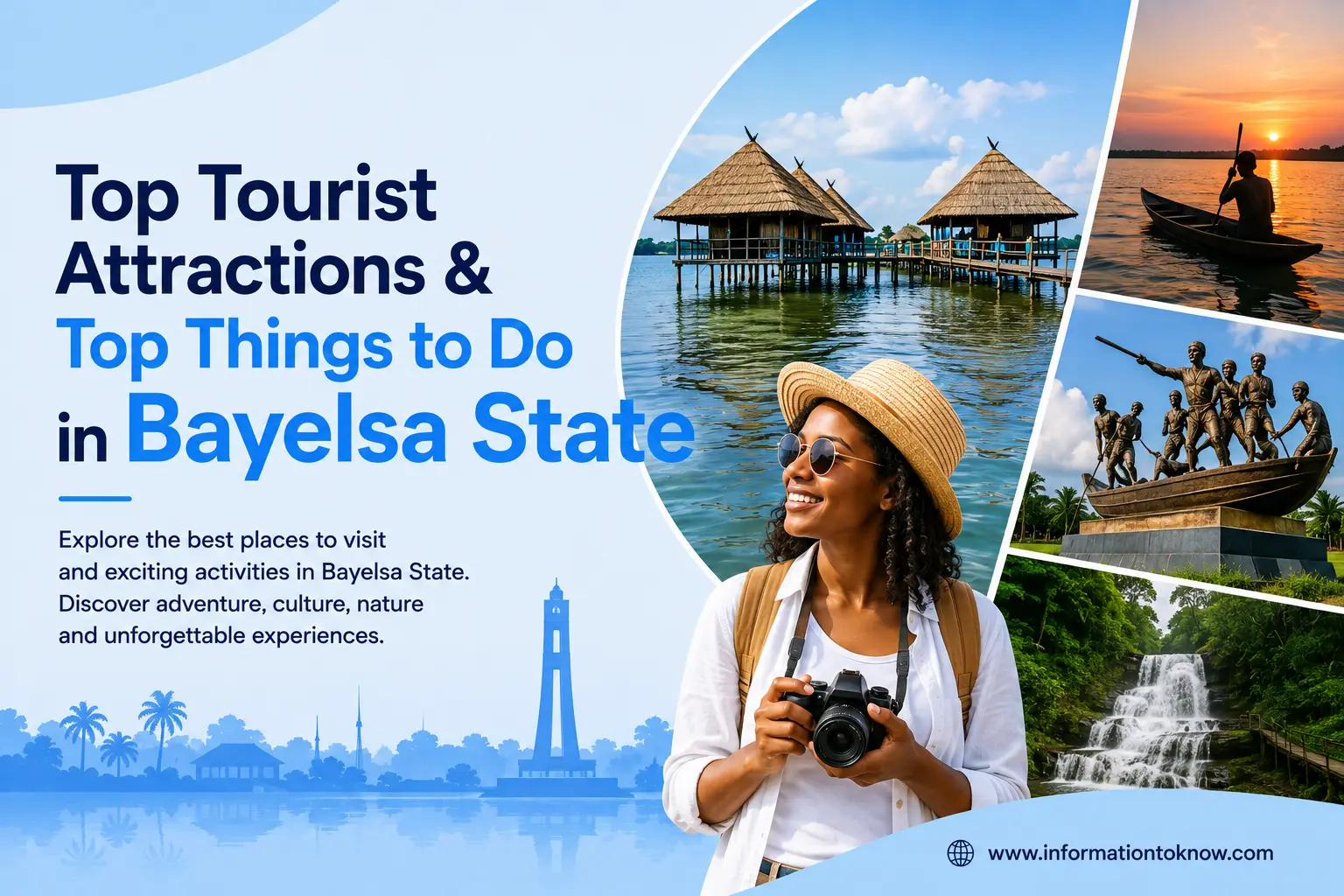
Planning a trip to Bayelsa and wondering what there actually is to see and do beyond Yenagoa?
Short answer: The top tourist attractions in Bayelsa State are Oxbow Lake in Yenagoa, the oil-history sites at Oloibiri, the slave-trade heritage of Akassa and the Royal Niger Company, the beaches of Brass Island, the historic waterfront of Nembe, and the famous fishing festival at Lake Efi. Add creek boat cruises, buzzing markets, fresh riverside food, and more than 50 annual festivals, and you have one of Nigeria’s most underrated travel destinations.
Bayelsa is a Niger Delta state of water, creeks, and deep Ijaw history, and most guides never take you past the capital. This one does. Below you’ll find the attractions worth your time across the whole state, the best things to do, what to eat, how to get there, when to go, where to stay, and an honest look at safety — plus a section for anyone posted here for NYSC.
Quick TL;DR:
- Don’t-miss attractions: Oxbow Lake, Oloibiri, Akassa, Brass Island, Nembe, Lake Efi.
- Best base: Yenagoa, the capital, where the hotels, food, and nightlife are.
- Best time to go: November–March (dry season, festival season).
- Getting there: Fly into Bayelsa International Airport, or drive from Port Harcourt or Warri.
- Safety: Real risks exist in the Niger Delta — plan carefully, use local guides, and check current advisories.
Bayelsa sits in the Niger Delta region and the South-South geopolitical zone, so its whole character — the food, the festivals, the way you move around — is shaped by water.
Jump To
What Is Bayelsa State Famous For?
Bayelsa is famous as the heartland of Nigeria’s Ijaw people and the birthplace of the country’s oil industry. According to the state government, Bayelsa was carved out of Rivers State in 1996, with Yenagoa as its capital, and its name is an acronym of its three founding local government areas — Balga (Brass), Yelga (Yenagoa) and Salga (Sagbama).
A few orientation facts help you picture the place:
- It covers roughly 10,773 square kilometres and has eight local government areas: Yenagoa, Ogbia, Nembe, Brass, Southern Ijaw, Ekeremor, Sagbama and Kolokuma/Opokuma.
- It’s Nigeria’s least populous state, with an estimated population “exceeding 2.5 million” per the state government (note: this is a projection, as no recent national census has been completed).
- It’s the birthplace of Nigeria’s oil: the country’s first commercial oil was struck at Oloibiri in 1956, which is why Bayelsa looms so large among the oil-producing states in Nigeria.
More than oil, though, Bayelsa is defined by its rivers and mangrove creeks. Much of the state is wetland, which is exactly why boats, fish, and water festivals sit at the centre of its tourism story.

Top Tourist Attractions in Bayelsa State
The best attractions in Bayelsa mix natural water landscapes with layered Niger Delta history. Here are the ones worth building a trip around.
Oxbow Lake, Yenagoa
Oxbow Lake is the single most popular attraction in Bayelsa and the easiest to reach; it sits right in central Yenagoa. The crescent-shaped lake is a relaxed spot for evening strolls, waterside events, and photos, and it has become the focus of the city’s tourism development. In 2025, Oxbow Lake’s status was boosted by the Best Western Plus Yenagoa, described as the first internationally branded hotel in the city, with a launch attended by former President Goodluck Jonathan and Governor Douye Diri. The lake’s pavilion also hosts food and art festivals throughout the year, so time your visit around one if you can.
Peace Park, the Ox-bow Lake pavilion, and Ministry of Tourism sites
Beyond the lake itself, the state’s tourism ministry curates a roster of official sites worth checking off. The Ox-bow Lake pavilion is Yenagoa’s go-to venue for cultural shows and seasonal festivals, while green spaces like Peace Park give the capital an easy, family-friendly spot to unwind. Because these are actively promoted, developed sites, they’re among the most accessible attractions for a first-time visitor staying close to the city.
Oloibiri Oil Well and the Oloibiri Museum
Oloibiri, in Ogbia LGA, is where Nigeria’s oil story began — Shell struck the country’s first commercial oil here in 1956. For decades, the community complained that it had little to show for that history, but a dedicated Oloibiri Museum and Research Center broke ground in 2023, backed by the PTDF, NCDMB, Shell and the state government, to turn the site into a national landmark. As the NDDC’s managing director put it, the museum “would also be a historical landmark for Nigeria.”
Note that, as of 2026, the museum is still under development, so treat Oloibiri for now as a pilgrimage to the birthplace of Nigerian oil rather than a finished visitor centre — confirm the museum’s status locally before you plan around it.
Akassa: beaches and slave-trade history
Akassa, on the Atlantic coast in Brass LGA, is one of Bayelsa’s most historically rich spots. According to Bayelsa’s Ministry of Tourism Development, Akassa was an early-1800s slave-trading post and a customary headquarters of the Royal Niger Company. Add a lighthouse, quiet beaches and fishing-village life to that layered trading history, and Akassa rewards travellers who want history with their coastline. It’s remote and reached by water, so plan it as a guided day tour rather than a casual drop-in.
Brass Island
Brass Island is the classic Bayelsa creek-and-coast escape — a fishing town with beaches, colonial-era relics and long views over the Atlantic. Getting there is part of the experience: you travel by boat through the creeks, passing security checkpoints along the way, which is exactly why a trusted local guide and a bit of extra time are essential.
Nembe
Nembe is one of the oldest and most storied kingdoms in the Niger Delta, a waterfront town whose history of trade and resistance runs deep. For travellers interested in Ijaw royalty, riverine architecture and living history away from the tourist trail, Nembe is a memorable stop — again, best done with a local contact who can navigate both the water and the customs.
Lake Efi and the Fishing Festival
Lake Efi (Efi Lake) in Sabagrela, Kolokuma/Opokuma LGA, hosts one of Bayelsa’s most distinctive cultural events — a fishing festival that, according to the state government, is traditionally held roughly every seven years upon the declaration of the community’s Chief Priest. When it happens, it’s a full homecoming, with fishing contests, masquerades, and celebrations. Even outside festival years, the lake and its surrounding communities offer a genuine slice of riverine Ijaw life.
Ijaw National Academy and the Government House axis
For a sense of Bayelsa’s identity and ambitions, the Ijaw National Academy and the broader Government House axis are worth a slow drive-through. This is where the state’s civic and cultural institutions cluster — showcasing architecture, cultural centres celebrating Ijaw heritage, and the seat of government — giving you the official face of Bayelsa alongside its creeks and markets.
Yenagoa’s city landmarks
If you’re based in the capital, a few landmarks anchor the cityscape: the Samson Siasia Sports Stadium, the busy Berger Roundabout, and the everyday buzz of the city centre. They won’t fill a whole day, but they’re easy, safe additions between your bigger outings.
Top Things to Do in Bayelsa State
The best things to do in Bayelsa lean into its water-and-culture identity; you plan your days around creeks, markets, food and festivals, not just landmarks. Slow down, get on the water, and let the state’s riverine rhythm set the pace.
- Take a creek boat cruise or canoe trip: Gliding through mangrove creeks is the definitive Bayelsa experience. You’ll pass fishing settlements, palm-lined banks and communities that live entirely by the water, and a small dugout canoe gets you into the quiet, narrow channels a bigger boat can’t reach. Always go with a trusted local boatman who knows the routes, the tides, and the checkpoints.
- Go birdwatching and sport fishing in the wetlands: The wetlands teem with waterbirds, and the creeks are rich fishing grounds. Head out early or late in the day with a guide, and you can watch local anglers work their nets or try your own hand at hooking river fish.
- Unwind at Oxbow Lake: The crescent-shaped lake in central Yenagoa is the city’s easy evening spot — good for a waterside stroll, photos and people-watching. Its pavilion also hosts food, art, and cultural events throughout the year, so check what’s on before you go.
- Shop the markets: Go thrift shopping, “okrika” or second-hand clothes, at Kpansia Market, then browse Swali Market, a busy waterfront hub for produce and daily local life. For the freshest catch, the fish markets around Swali and Tombia are where the creeks meet your plate.
- Do a Bayelsa food crawl. The street-food scene, especially bole and fish, is a highlight in itself. Work your way from roadside grills to local buka spots and finish with suya in the evening (more below).
- Chase a festival and catch a cultural performance. With dozens of community festivals a year, there’s almost always something on somewhere in the state. Time your visit right, and you might see masquerades, boat regattas or traditional wrestling — Bayelsa at its most alive.
- Enjoy the nightlife. Yenagoa has a lively lounge and bar scene for winding down after a day on the water. Ekeki and the city centre are your best bets for music, drinks, and a late meal.
- Take a day trip by boat. Use Yenagoa as your base and head out to Brass, Akassa or Nembe for beaches, coastal history and old riverine towns. These are water journeys through the creeks, so build in extra time and travel with a local host.
- Shoot the creeks. The light on the water, the mangroves, and the fishing life make the creeks a photographer’s dream. Ask permission before photographing people, and keep your gear dry and secured on the boat.
- Experience Ijaw hospitality and music. Some of the best moments come off the itinerary — a shared plate of fresh fish, live highlife or local drumming, and the warmth of an Ijaw host. A good local contact turns a sightseeing trip into a real welcome.
A note on the water trips: nearly all the standout experiences here involve boats and creeks, so a reliable local guide isn’t optional. Arrange one in advance, confirm the day’s route and tides, and don’t head into unfamiliar waterways alone.
What to Eat in Bayelsa State
Bayelsa food is riverine, fresh and generous — heavily seafood-forward and unapologetically spicy. Almost everything comes off a boat or a grill, so eat where the catch is freshest. The dishes to seek out:
- Bole and fish. Roasted plantain with grilled fish and pepper sauce, the state’s signature street meal. You’ll find it at roadside grills across Yenagoa, smoky, cheap, and deeply satisfying; the plantain is charred soft, and the fish is served whole with a punchy sauce.
- Kekefiyai. A hearty plantain pottage cooked with fish or assorted seafood, this is pure Ijaw comfort food and arguably the state’s signature home dish. It’s rich, peppery, and filling, the kind of meal a local family will proudly put in front of you.
- Polofiyai. A thick yam pottage in the same family as kekefiyai, cooked down with palm oil and seafood into something soft and warming. Ask for it at buka spots that cook proper Ijaw food.
- Fresh seafood, straight from the creeks. Periwinkles (“isam”), prawns, crayfish, crabs, catfish, and tilapia all turn up fresh here. They anchor the soups and stews, and eating them this close to the source is part of the point.
- Banga (palm-nut) soup and fisherman soup. Banga is the classic Niger Delta palm-fruit soup, and the local fisherman soup loads it up with mixed fresh seafood. Both are best eaten with a starchy swallow.
- Native/pepper soup with fresh fish. A light, fiery broth built around river fish and local spices — perfect on a rainy afternoon and a good way to taste the fish at its purest.
- Starchy swallows to pair. Ijaw starch (a smooth, stretchy cassava swallow) is the traditional match for banga and fish soups, but you’ll also get garri/eba and fufu. Order the swallow the locals recommend for the soup you’re having.
- Roasted or grilled fish and bush meat. Beyond bole, whole grilled fish is everywhere, and some spots serve bush meat for those who want it. Both go down well with a cold drink in the evening.
- Bayelsa suya. The local take on Nigeria’s favourite grilled-meat snack, famously found around Ekeki. Grab it at night from the roadside grills, with extra pepper and onions on the side.
- Palm wine and local drinks. Palm wine is the traditional drink to wash it all down — fresh and lightly sweet early in the day, sharper as it ferments. It pairs naturally with the pepper-heavy food.
Where to eat: for the real thing, follow the locals to buka or “mama put” spots and the street-food clusters around Ekeki and the city centre, where the fish is freshest, and the prices are honest. Hotel restaurants in Yenagoa are a reliable fallback if you want a calmer, sit-down meal.
Bayelsa Festivals and Culture
Culture is arguably Bayelsa’s biggest attraction. The state’s tourism ministry notes that Bayelsa’s cultural calendar “pulsates with over 50 annual festivals,” each community showcasing its own heritage through masquerades, boat regattas, wrestling and fishing contests. There’s also fresh momentum behind promoting them: in late 2025, the Nigerian Tourism Development Authority and the Odi community made a renewed push to promote indigenous festivals as an economic driver, with the NTDA’s director-general calling tourism something that can sustain this nation.
To understand the festivals, understand the Ijaw. This is a riverine people whose life, worship and celebration all turn on the water, so the creeks aren’t just a backdrop — they’re the stage. Masking (masquerade) traditions, drumming, dance and call-and-response singing carry the stories, while the language, dress and famed Ijaw hospitality give each community its own texture. When a festival lands, the whole town turns out.
A few of Bayelsa’s better-known celebrations:
- Odi Ogori Ba-Uge — the Odi festival in Kolokuma/Opokuma that commemorates the community’s historic triumph over a buffalo, marked with masquerades, dance and homecoming.
- Seigbein and community fishing festivals — traditional fishing contests where communities take to the water together, blending competition with ceremony.
- Lake Efi fishing festival — the distinctive event at Efi Lake in Sabagrela, a full homecoming of fishing, masquerades, and celebration when it’s held.
- Boat regattas — colourful, competitive canoe processions on the creeks, one of the most photogenic sights in the Delta.
- Traditional wrestling — a long-standing test of strength and community pride, often staged alongside the bigger festivals.
Bayelsa’s culture is also its history. This is the homeland tied to the Isaac Adaka Boro heritage, a name that still carries weight in Ijaw identity and the story of the Niger Delta. That sense of a people rooted in their rivers runs through the ceremonies you’ll witness — the river blesses, gathers and celebrates.
If you want to experience any of this properly, go with a local host or guide. They’ll tell you which festival is actually happening and when, get you welcomed rather than gawking, and steer you on the customs — how to greet elders, when to ask before taking photos, and how to show respect at a ceremony. Align your visit with a major festival if you can; it’s when Bayelsa is at its most alive.
How to Get to Bayelsa State
The quickest way in is by air, and your options have grown in 2026. Bayelsa International Airport, on Wilberforce Island near Yenagoa, is served by carriers including United Nigeria and Ibom Air from Lagos and Abuja. The state has also backed its own Pioneer Airlines, which received its air operator’s certificate from the NCAA in May 2026 to begin flight operations with ATR 72-600 aircraft, with plans to connect Yenagoa to cities such as Lagos, Abuja, Port Harcourt, Warri, Uyo and Calabar.
If you prefer to travel overland, Bayelsa is roughly one to two hours by road from Port Harcourt and also reachable from Warri. For the outlying islands like Brass and Akassa, the final leg is by boat through the creeks. You can compare gateways on our guide to airports in Nigeria, and if you’d rather have logistics handled, one of the established travel agencies in Nigeria can arrange transfers and guides.
When Is the Best Time to Visit Bayelsa State?
The best time to visit Bayelsa is the dry season, from November to March, when the weather is most comfortable and the festival calendar is busiest. The rainy season runs roughly from April to October, and flooding is common during those months — something to factor in seriously when planning creek travel.
NB: Slide left to view the table if you’re on mobile.
| Season | Months | What to expect | Good for |
|---|---|---|---|
| Dry/harmattan | November–March | Drier, cooler, dusty harmattan haze | Festivals, boat trips, easiest travel |
| Rainy season | April–October | Heavy rain; flooding common (peak July–August) | Lush scenery, but harder logistics |
Note: exact rainfall varies year to year — check a current forecast before you travel, especially if creek trips are on your list.
Where to Stay in Bayelsa State
Almost all visitors base themselves in Yenagoa, which has the widest range of places to stay, from budget guesthouses to full-service hotels. The headline recent addition is the Best Western Plus at Oxbow Lake, billed as the city’s first internationally branded hotel, which opened in 2025 and gives Bayelsa a genuine international-standard option right on its most popular attraction.
NB: Slide left to view the table if you’re on mobile.
| Where | Style | Best for |
|---|---|---|
| Best Western Plus, Oxbow Lake | International-branded hotel | Lakeside comfort, business travellers |
| Established Yenagoa hotels | Mid-range | Reliable base near attractions |
| Guesthouses | Budget | Longer stays, corpers, backpackers |
Note: book ahead during major festival periods, when Yenagoa rooms fill quickly.
Is Bayelsa State Safe for Tourists?
This is the honest part every good guide owes you. Bayelsa is in the Niger Delta, and as of June 2026, the U.S. State Department advisory rates the state “Level 4 – Do Not Travel,” citing a high risk of kidnapping, violent protests and armed gangs, while Nigeria overall is rated “Level 3 – Reconsider Travel.” Canada issues a comparable high-risk advisory for the Niger Delta states. Flooding is also common between May and October.
That doesn’t mean Bayelsa is off-limits — plenty of Nigerians and visitors travel there without incident — but it does mean you should plan deliberately:
- Stay mostly in and around Yenagoa, where the security presence and infrastructure are strongest.
- Use trusted local guides for any trip into the creeks or to islands like Brass, Nembe, and Akassa.
- Travel in daylight, keep a low profile, and avoid remote waterways without an escort.
- Share your itinerary with someone reliable, and check the latest advisories before you set out.
Treat safety as part of the plan, not an afterthought, and Bayelsa opens up.

Serving in Bayelsa? A Note for NYSC Corpers
If you’ve been posted to Bayelsa for NYSC, you’re in one of Nigeria’s most culturally distinct states, and a year here can be genuinely rewarding if you plan it well. You’ll camp at the state orientation centre, and during your service year you can work through much of this guide: Oxbow Lake evenings, bole and fish runs, market days and, with fellow corpers and a local guide, the occasional creek adventure.
A few practical pointers: find out whether Bayelsa is among the states that pay corpers a state allowance on top of the federal allawee, and go in prepared with our NYSC camp checklist. If you’re still hoping to influence where you serve, it’s worth reading up on the best NYSC orientation camps in Nigeria and which state has the best NYSC camp. Whatever you decide, travel to the islands in groups and never go solo into unfamiliar creeks.
A Suggested 3-Day Bayelsa Itinerary
Short on time? This sample plan strings the best of Bayelsa together from a Yenagoa base.
- Day 1 — Yenagoa: Settle in, walk Oxbow Lake in the evening, dinner of bole and fish, then the city’s lounges.
- Day 2 — Culture and history: A guided run out toward Oloibiri for the oil-history story, markets in the afternoon, a festival or cultural show if one’s on.
- Day 3 — The water: A guided boat cruise through the creeks (weather and security permitting), aiming for Brass or Nembe if conditions allow, back to Yenagoa by evening.
Adjust the water day first if the forecast or advisories look unfavourable.
Start Planning Your Bayelsa Trip
Now that you know what Bayelsa offers, turn it into a plan: pick a travel window in the November–March dry season, book flights into Bayelsa International Airport (or your road route from Port Harcourt), line up a trusted local guide for any creek or island trips, and check the latest travel advisories before you lock anything in. Start with two nights in Yenagoa built around Oxbow Lake, add one guided history or water day, and you’ll have seen the best of a state most travellers overlook.
Frequently Asked Questions on Bayelsa Places and Things To Do
What is Bayelsa State famous for?
Bayelsa is famous as the heart of Nigeria’s Ijaw nation and the birthplace of the country’s oil industry — the first commercial oil was struck at Oloibiri in 1956. It’s also known for its vast creeks, wetlands, and more than 50 annual cultural festivals.
What are the top tourist attractions in Bayelsa State?
The standouts are Oxbow Lake in Yenagoa, Oloibiri (Nigeria’s oil cradle), Akassa’s slave-trade and Royal Niger Company history, Brass Island’s beaches, Nembe’s historic waterfront, and Lake Efi with its famous fishing festival.
What are the best things to do in Yenagoa?
Relax at Oxbow Lake, thrift-shop at Kpansia Market, browse Swali Market, eat bole and fish, try Bayelsa suya at Ekeki, take a creek boat cruise, and enjoy the city’s lounges and nightlife.
Is Bayelsa State safe for tourists?
Bayelsa sits in Nigeria’s Niger Delta, and as of June 2026, the U.S. State Department rates it “Level 4 – Do Not Travel” over kidnapping and crime risks. Many people still visit safely by staying in Yenagoa, using trusted local guides, travelling in daylight, and avoiding remote creeks without an escort.
How do I get to Bayelsa State?
You can fly into Bayelsa International Airport near Yenagoa (served by United Nigeria and Ibom Air, with the new state-owned Pioneer Airlines launching routes in 2026), or travel by road from Port Harcourt (about one to two hours) or Warri.
What is the capital of Bayelsa State?
Yenagoa is the capital and largest city, and the base for most tourism, hotels, and attractions in the state.
How many local government areas does Bayelsa have?
Bayelsa has eight LGAs: Yenagoa, Ogbia, Nembe, Brass, Southern Ijaw, Ekeremor, Sagbama, and Kolokuma/Opokuma.
What is the best time to visit Bayelsa State?
The dry, harmattan months of November to March are the most comfortable and coincide with the richest festival season. April to October is the rainy season, when flooding is common.
What food is Bayelsa known for?
Bole (roasted plantain) and fish, fresh seafood, kekefiyai (a plantain-and-fish pottage), and the local Bayelsa suya are the dishes to try, usually washed down with fresh palm wine.
What is Oloibiri known for?
Oloibiri, in Ogbia LGA, is where Shell struck Nigeria’s first commercial oil in 1956. A dedicated Oloibiri Museum and Research Center broke ground in 2023 to mark the site’s place in history.
Where can I stay in Bayelsa State?
Most visitors stay in Yenagoa, which has everything from budget guesthouses to the Best Western Plus at Oxbow Lake — the city’s first internationally branded hotel, which opened in 2025.
Can I visit Brass Island and Akassa?
Yes, but both are reached by boat through the creeks and involve security checkpoints, so travel with a local guide, allow extra time, and confirm current safety conditions before setting out.
What should NYSC corpers know about serving in Bayelsa?
Corpers posted to the Bayelsa camp at the state orientation centre can explore Yenagoa’s attractions, food and festivals during their service year — check whether the state pays an extra allowance and plan trips to the creeks with fellow corpers for safety.