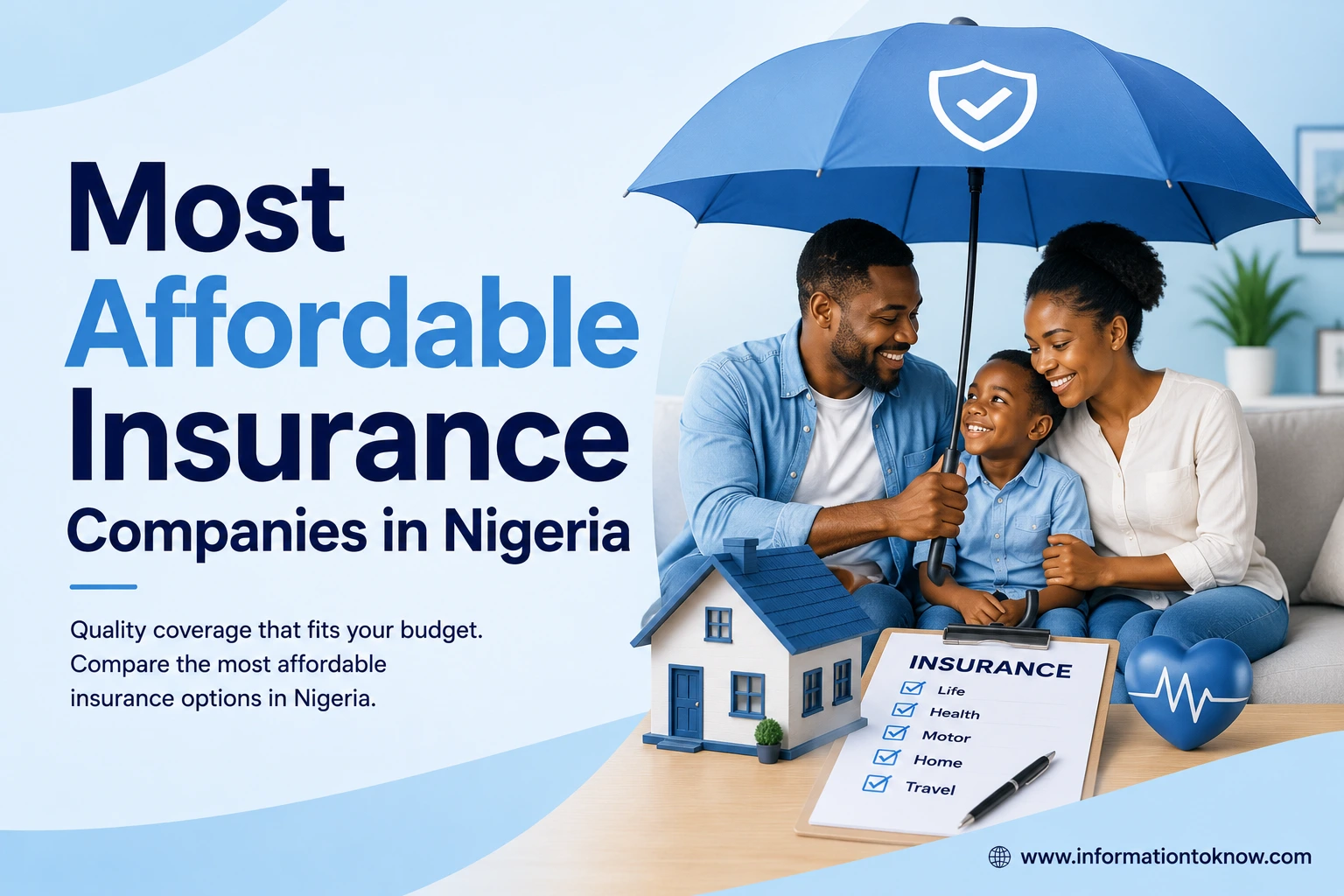
You’re here because you want a straight answer: which insurance companies in Nigeria give you real cover for the least money — and how little you can actually pay — without ending up with a policy that never pays out. The problem is that most lists online just name the same big brands, quote prices from three years ago, and never tell you what things cost today.
Quick answer: The cheapest legal car insurance in Nigeria is third-party motor cover at a fixed ₦15,000 per year for private cars and Leadway, AIICO, AXA Mansard, Cornerstone, Heirs, and Zenith all sell it at that same regulated floor. For health, plans start from about ₦20,000/year (AXA Mansard EasyCare) or ₦3,500/month (Reliance HMO); for home, from about ₦10,000/year (AIICO). And thanks to a major 2025 reform, affordable no longer has to mean unreliable.
This guide gives you the real, dated prices for car, health, home, and life insurance in one place, names the most affordable insurers for each, and answers the question every budget buyer secretly has: will a cheap plan actually pay when I need it? Every figure here is sourced, researched, and current, so you’re not relying on a stale listicle.
Jump To
What Affordable Really Means in Nigerian Insurance
Cheap and affordable are not the same thing; a policy is only truly affordable if it pays out when you file a claim. That distinction matters more in Nigeria than almost anywhere, because so few people are covered in the first place.
According to a Business Day Report, Nigeria’s insurance penetration is just about 0.4% of GDP despite a population of over 200 million — one of the lowest rates in Africa. South Africa sits above 11% and Kenya around 1.2%. Price is the biggest reason: for most households, insurance competes with food, rent, and fuel.
The market itself is growing fast, though. The industry’s gross written premium reached ₦1.562 trillion in 2024, a 56% jump from ₦1.003 trillion in 2023. Regulators say the barrier is as much about awareness as money. As NAICOM Commissioner Olusegun Omosehin told operators in 2026:
“A major contributor to the low insurance penetration is the persistent gap in public understanding of insurance products, processes, and benefits.”
The takeaway: chase value, not just the lowest sticker price. Below, every recommendation balances price against the insurer being licensed and financially able to pay.

The Cheapest Legal Car Insurance in Nigeria: Third-Party at ₦15,000
If you just need to be legal on the road for the least money, buy third-party motor insurance. It costs a flat ₦15,000 per year for a private car, and that price is the same at every licensed insurer because the regulator fixes it.
NAICOM raised the third-party premium from ₦5,000 to ₦15,000 effective January 1, 2023, and the important part is what you get for it. According to Nairametrics, the third-party property damage claims limit is now ₦3 million for a private car, up from just ₦1 million before. So if any blog still quotes ₦5,000 for third-party, it’s out of date.
The ₦15,000 figure is only for private cars. NAICOM’s circular set a full schedule by vehicle class:
NB: Slide left to view the table if you’re on mobile.
| Vehicle class | Annual premium | Third-party claims limit |
|---|---|---|
| Private car | ₦15,000 | ₦3 million |
| Own goods vehicle | ₦20,000 | ₦5 million |
| Staff bus | ₦20,000 | ₦3 million |
| Trucks / general cartage | ₦100,000 | ₦5 million |
| Tricycle (keke) | ₦5,000 | ₦2 million |
| Motorcycle (okada) | ₦3,000 | ₦1 million |
So whether you drive a private car, run a keke, or own a delivery truck, that table is your cheapest legal starting point.
Comprehensive Car Insurance: How Low Can It Realistically Go?
Comprehensive cover — which pays for damage to your own car as well as third parties — can’t legally be sold as cheaply as third-party, because the regulator sets a floor. NAICOM’s rule is that comprehensive motor premiums must be at least 5% of the sum insured after all rebates and discounts.
In plain terms, expect to pay at least 5% of your car’s current value per year, and often a little more — industry estimates put real-world comprehensive cover at roughly 5–10% of a car’s market value, so a ₦4 million Camry runs somewhere around ₦200,000 to ₦400,000 a year. Treat those naira figures as indicative rather than fixed, because each insurer prices risk differently.
To keep comprehensive affordable, look at insurers with flexible, entry-level motor products — AXA Mansard’s AutoFlex and AutoPlus plans, Leadway, AIICO, Cornerstone, and Heirs all offer scaled-down comprehensive options, some with instant certificates and a free vehicle tracker.
Most Affordable Insurers for Cheap Car Insurance
Because third-party is a fixed price, the cheapest insurer question is really about value at the floor price — who gives you the smoothest service and extras for that same ₦15,000. These licensed insurers consistently offer budget-friendly motor cover:
- Leadway Assurance — the largest insurer by market presence; strong claims track record and medical-expense extras on motor policies.
- AIICO Insurance — affordable plans for private and commercial vehicles (taxis, buses, fleets), with instant third-party certificates.
- AXA Mansard — flexible AutoFlex/AutoPlus plans, instant certificate issuance, and a free tracker on comprehensive.
- Cornerstone Insurance — competitively priced motor, travel, and home products, with a well-developed online buying flow.
- Heirs Insurance — digital-first, entry-level “flexi” motor plans built for low starting premiums.
- Zenith General Insurance — affordable third-party and comprehensive, backed by the Zenith banking group.
You can see the full regulator-approved field in our list of insurance companies in Nigeria before you choose.
Cheapest Health Insurance (HMO) Plans in Nigeria
The most affordable health cover in Nigeria comes from HMO basic plans, which start well under ₦30,000 a year. A Nairametrics January 2025 ranking of the cheapest health plans found individual cover ranging from as low as ₦3,500 to ₦50,000 annually, with these among the lowest from reputable providers:
NB: Slide left to view the table if you’re on mobile.
| Plan | Price | Notes |
|---|---|---|
| AXA Mansard EasyCare | ₦20,000/year | Covers maternity, mental health, CT/MRI scans |
| Well Health Network Basic | ₦18,500/year | Individual entry plan |
| Anchor HMO Welfare Basic | ₦24,000/year | Basic outpatient package |
| Avon HMO Life Starter | ₦27,500/year | Consultations, outpatient, emergency |
| Reliance HMO (basic) | ₦3,500/month | Lowest monthly entry point |
Prices creep up with healthcare inflation, so confirm the current rate before you subscribe. For a fuller breakdown, see our guide on how much health insurance costs in Nigeria.
What a Cheap HMO Plan Actually Covers and What It Doesn’t
A basic plan is built for everyday primary care, not major medical events. At this price, you can typically expect GP consultations, treatment for common illnesses (malaria, typhoid, respiratory and urinary infections), basic tests, and a limited drug list.
What’s usually excluded on the cheapest tier: surgery, chronic-condition management, dialysis, cancer care, dental and optical, and sometimes maternity.
Before you pay, ask three questions: which hospitals are on the provider network near you, is there a waiting period (many plans lock maternity for 9–12 months), and what is the annual limit per person? A ₦20,000 plan that includes your neighbourhood hospital beats a ₦18,500 one that forces you across town.
How to Keep Health Cover Cheap Without Regretting It
- Match the plan to your real risk — a young, healthy individual may only need a basic outpatient plan, while a family should compare family bundles that spread the cost per head.
- Buy the plan, not the brand — coverage and network matter more than the insurer’s name at this price point.
- Check the National Health Insurance Authority (NHIA) route too — formal-sector and some voluntary NHIA plans can be cheaper than private HMOs, though the hospital list is narrower.
- Pay annually where you can — monthly billing (like Reliance’s ₦3,500/month) is convenient but usually costs more over a year than an upfront annual plan.
Most Affordable Home Insurance in Nigeria
Home insurance is cheaper than most Nigerians assume. Basic householder cover starts at around ₦10,000 a year. AIICO’s householder plan, for instance, is sold on a flat premium basis of ₦10,000 per annum, covering fire and burglary losses up to set limits.
Standard home policies with wider cover typically start from around ₦20,000 a year, and premiums scale up with the value of your building and its contents, so a high-value property will naturally cost more. AIICO, Leadway, Allianz, Zenith, and Heirs all offer affordable homeowner and tenant options.
You don’t have to own a house to insure your home. There are two things you can cover, and you can buy one or both:
- Building cover protects the physical structure — walls, roof, fixtures — against fire, storm, flood, and similar risks. This is for homeowners and landlords.
- Contents cover protects what’s inside — furniture, electronics, appliances, personal belongings — against fire, theft, and burglary. Tenants can buy contents cover on their own, which is where the cheapest ₦10,000–₦20,000 plans come in.
What to check before you buy the cheapest home insurance plan:
- Insure for the rebuild/replacement cost, not the market price. Under-insuring to save on premium is the most common mistake — if your ₦8m contents are insured for ₦2m, most insurers pay out only a fraction of any claim.
- Confirm the perils. A basic fire-and-burglary policy may exclude flood or storm damage; if you’re in a flood-prone area, that add-on is worth the extra naira.
- Keep proof. Photograph valuables and keep receipts — it makes claims faster and reduces disputes.
Ways to lower a home premium
Fit basic security (burglar-proofing, fire extinguisher, working locks), bundle it with your car policy for a multi-policy discount, and pay the year upfront rather than in instalments.
Affordable Life Insurance in Nigeria
If you want life cover on a budget, term life is the cheapest route. It pays a lump sum to your family if you die within a set period (say 5, 10, or 20 years) and has no savings component, which is exactly why premiums stay low. Unlike motor insurance, life premiums aren’t standardised by the regulator; they depend on your age, health, cover amount, and term, so prices vary widely between insurers.
At least one digital insurer, Heirs Life, advertises term cover from around ₦1,000 a month, but treat any headline figure as an indicative starting point and request a personalised quote. Leadway, AIICO, AXA Mansard, and Heirs are among the established names offering entry-level term and family life plans.
Know the three main types of life insurance before you compare prices:
- Term life — pure protection for a fixed period; the cheapest way to get a large payout for your dependants. Best if your goal is simply to protect income or a loan.
- Whole life — lifelong cover that also builds a small cash value; more expensive, so not the budget pick.
- Endowment/savings plans — combine cover with forced savings that pay out at maturity; useful for goals like school fees, but you’re paying for the savings, not just the protection.
How much coverage do you need for life insurance?
A simple rule of thumb is to aim for roughly 5–10 times your annual income, plus any outstanding debts (rent, a car loan, a mortgage), so your family isn’t left carrying them. You can start smaller and increase later.
How to keep life cover affordable:
- Buy young and healthy — premiums rise sharply with age and pre-existing conditions, so the cheapest term policy is the one you start now.
- Choose term over whole life if budget is the priority — you get the biggest payout per naira.
- Add riders only if you’ll use them — extras like critical-illness or accident cover raise the premium; skip the ones that don’t fit your situation.
- Be honest on the form — non-disclosure of health issues is the fastest way to have a claim rejected, which defeats the entire point of buying cheap cover.
Is Cheap Insurance Reliable? What the 2025 Reform Changed
Yes, and it’s more reliable now than it has been in years. The biggest risk with cheap insurance was never the price; it was whether a weak insurer could actually pay claims. That’s exactly what Nigeria’s latest reform set out to fix.
The Nigerian Insurance Industry Reform Act (NIIRA) 2025 was signed into law on 31 July 2025 by President Bola Ahmed Tinubu, forcing insurers to hold far more capital. By August 2026, following a recapitalisation exercise, 43 insurance and reinsurance companies were confirmed compliant with the new capital requirements.
The regulator’s own explanation of why this matters for you: the increase in minimum capital;
“Will improve insurers’ ability to honour policyholder obligations promptly, absorb emerging risks and compete more effectively within regional and global insurance markets.”
Industry insiders frame affordability and trust as two sides of the same coin. As Tope Adaramola of the Nigerian Council of Registered Insurance Brokers noted in late 2025;
“We also have poverty, which leaves most Nigerians with little for insurance but narratives are changing with more pragmatism by the regulator and the operators.”
The practical risk that remains is fake cover — cheap “third-party certificates” hawked in traffic that aren’t backed by any real policy, and slow payouts from unlicensed operators. The fix is simple: only buy from a NAICOM-licensed insurer, and verify your certificate (more on that later).
How to Lower Your Insurance Premium in Nigeria
You can cut what you pay without dropping to a fake plan. The most effective levers:
- Buy third-party, not comprehensive, on older or low-value cars — ₦15,000 flat is hard to beat.
- Pay annually instead of in instalments to avoid financing add-ons.
- Install an approved vehicle tracker — many insurers discount comprehensive premiums for it.
- Keep a clean claims record — a no-claims history earns rebates at renewal.
- Bundle policies (car + home, or family health) with one insurer for a multi-policy discount.
- Compare quotes from at least three licensed insurers before you commit.
- Buy directly from the insurer’s website or a licensed broker rather than an unverified middleman.
How to Check an Insurer is Licensed and Your Certificate is Genuine
Before you pay anyone, confirm two things: the company is licensed, registered with CAC, and your certificate is real. Check the insurer against NAICOM’s official register of licensed companies, and verify any motor certificate through the industry’s NIID (Nigerian Insurance Industry Database) portal — a genuine third-party certificate will show up there against your plate number. If it doesn’t, you’ve been sold a fake. Our list of insurance companies in Nigeria is a good starting point for cross-checking names.
Start Small, Then Level Up Your Cover
Here’s your next move: if you own a car, get a genuine ₦15,000 third-party certificate today from any NAICOM-licensed insurer — Leadway, AIICO, AXA Mansard, Cornerstone, Heirs, or Zenith — and verify it on the NIID database so you know it’s real. That single step makes you legal and covers you for up to ₦3 million in third-party damage for the price of less than a tank of fuel.
From there, upgrade as your budget grows: add a basic HMO plan from around ₦20,000/year for your health, a ₦10,000 household plan for your home, and comprehensive motor cover when your car’s value justifies it. Affordable insurance in Nigeria isn’t about finding the cheapest company — it’s about buying the right minimum cover from a licensed, well-capitalised insurer, then building up. Start small, verify everything, and level up.
Most Affordable Insurance Companies Frequently Asked Questions
What are the most affordable insurance companies in Nigeria?
For basic car cover, Leadway, AIICO, AXA Mansard, Cornerstone, Heirs, and Zenith all sell the mandatory third-party motor policy at the NAICOM floor of ₦15,000/year. For health, AXA Mansard (EasyCare, ₦20,000/year) and Reliance HMO (₦3,500/month) are among the cheapest; for home, AIICO’s householder plan starts at ₦10,000/year.
How much does insurance cost in Nigeria?
It depends on type: third-party car insurance is fixed at ₦15,000/year for private cars; comprehensive car cover is at least 5% of your car’s value (roughly ₦200,000–₦400,000 on a ₦4 million car); basic health plans start around ₦18,500–₦27,500/year; home insurance starts from about ₦10,000/year.
What is the cheapest car insurance in Nigeria?
Third-party motor insurance at ₦15,000/year is the cheapest legal option. It’s the statutory minimum set by NAICOM (effective 1 January 2023) and covers up to ₦3 million in third-party property damage.
How much is third-party car insurance in Nigeria?
₦15,000/year for private cars, ₦5,000 for tricycles (keke), ₦3,000 for motorcycles (okada), ₦20,000 for staff buses and own-goods vehicles, and ₦100,000 for trucks and general cartage.
Why did third-party insurance increase from ₦5,000 to ₦15,000?
NAICOM raised it via Circular 46/2022 to fund a higher claims limit — third-party property damage cover jumped from ₦1 million to ₦3 million for private cars. Any list still quoting ₦5,000 is out of date.
What is the cheapest health insurance (HMO) in Nigeria?
AXA Mansard’s EasyCare plan (₦20,000/year) and Reliance HMO’s basic plan (₦3,500/month) are among the cheapest, with entry plans ranging from about ₦18,500 to ₦50,000 per year.
What are the top 3 insurance companies in Nigeria?
By size and market presence, Leadway Assurance, AIICO Insurance, and Custodian & Allied Insurance are consistently ranked at the top, with AXA Mansard and Cornerstone close behind.
Which car insurance company in Nigeria offers the best coverage?
For comprehensive cover, Leadway, AIICO, and AXA Mansard are widely regarded for strong coverage and claims service; AXA Mansard and Cornerstone offer flexible plans with instant certificates and vehicle trackers.
Is cheap insurance in Nigeria reliable — will it actually pay out?
Increasingly yes. The Nigerian Insurance Industry Reform Act 2025 forced insurers to raise capital, and by August 2026, 43 insurers had met the new thresholds — strengthening their ability to honour claims. Always buy from a NAICOM-licensed insurer and verify your certificate.
How can I lower my insurance premium in Nigeria?
Choose third-party over comprehensive on older cars, pay annually, install an approved tracker, keep a clean claims history, bundle policies, and compare quotes from several licensed insurers before buying.
How do I know an insurance company is licensed in Nigeria?
Check NAICOM’s official list of licensed insurers and verify any motor certificate through the industry’s NIID database — fake third-party certificates are a common scam.
How much is home insurance in Nigeria?
Basic householder cover starts at about ₦10,000/year (AIICO), and standard home policies typically start from around ₦20,000/year, with premiums rising in line with the value of your building and its contents.
Is insurance compulsory in Nigeria?
Some types are: third-party motor insurance is legally required for every vehicle on Nigerian roads, and certain buildings and employers’ liability covers are mandatory. Health, home, and life insurance are optional but strongly advised.