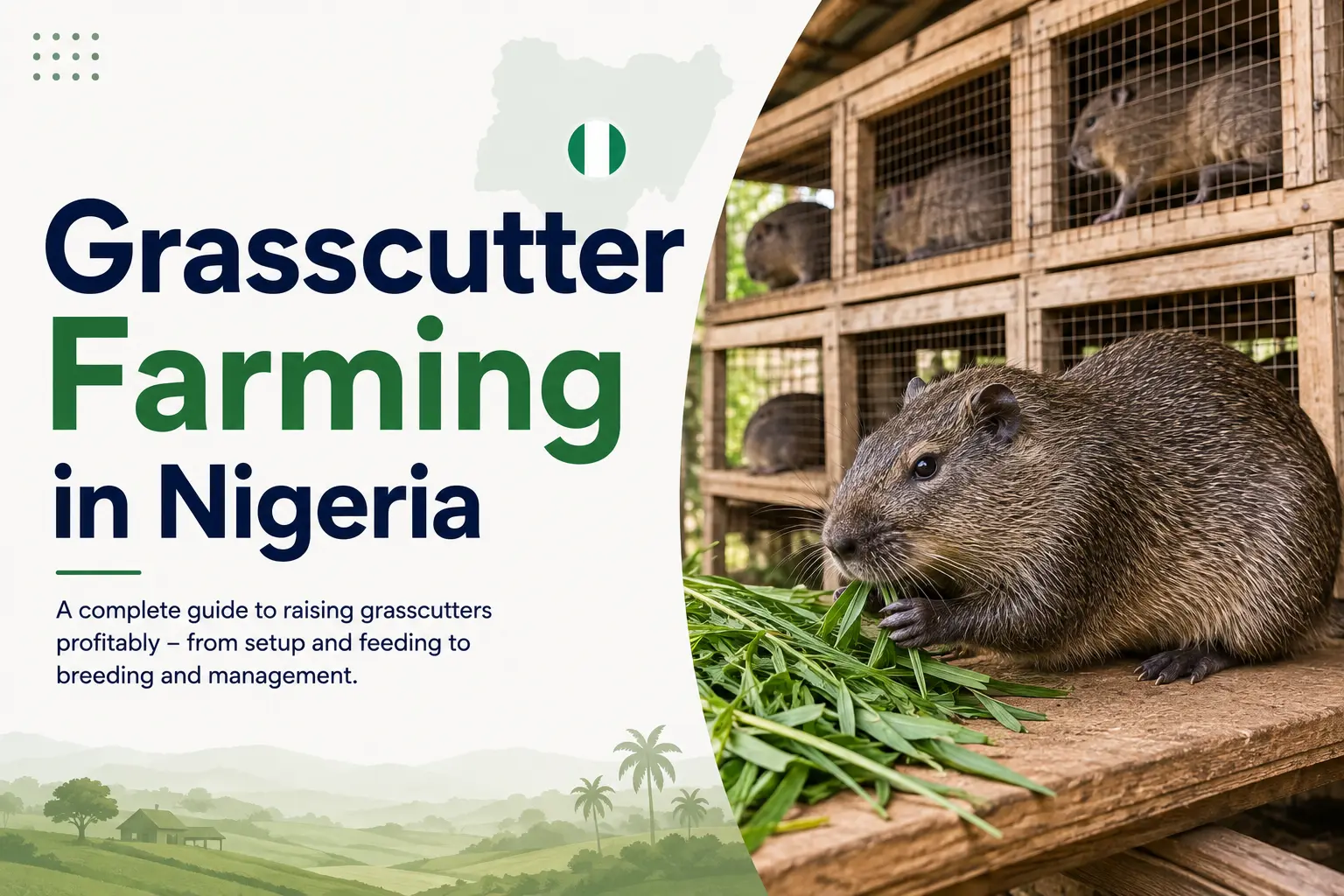
Short answer: Grasscutter farming is the rearing of the greater cane rat in cages for its meat, and it’s one of the cheapest ways to break into livestock in Nigeria. The animals eat mostly free grass, breed fast, and their meat sells at a premium as a bushmeat delicacy. It can be genuinely profitable, but it is not “get rich quick.” Your success comes down to good foundation stock, steady feeding, keeping deaths low, and knowing where to sell, not paying for expensive training. This guide walks you through the whole thing in Naira and plain steps.
If you’ve been looking into farming side incomes — the same way people research cucumber farming or a POS business — grasscutter farming keeps coming up because the entry cost is low and the demand is real. The problem is that most of what’s online is either a gated PDF, a paid course, or a thin post that dodges the two questions you actually care about: what will this cost me, and will it pay? This guide answers both, honestly.
Jump To
What Is a Grasscutter (and Why Do Nigerians Farm It)?
A grasscutter is the greater cane rat (Thryonomys swinderianus), a large grass-eating rodent farmed for its meat rather than caught in the wild. Nigerians farm it because the meat is one of the most sought-after forms of bushmeat, and demand comfortably outstrips the supply that hunting alone can provide.
The scale of that demand is significant. A 2025 peer-reviewed research from Frontiers in Veterinary Science describes Nigeria as one of the largest bushmeat consumers in West Africa, with a trade estimated at around 100 metric tonnes annually. And within that trade, grasscutter stands out: another 2024 Frontiers in Veterinary Science study of bushmeat markets in Ibadan found grasscutter was the most sold and most preferred species among traders, earning them roughly ₦1,000–₦3,000 profit per animal.
There’s also a bigger economic backdrop. Livestock is a serious part of Nigeria’s economy — the sector contributed about ₦11.9 trillion, or 5.6% of GDP, in 2024 — and agriculture as a whole made up roughly 28% of GDP between 2021 and 2024 while employing about 40% of the labour force. Add to that a real protein gap — the IPC estimates that around 5.4 million children in conflict-affected northern Nigeria faced acute malnutrition through 2025 — and affordable, locally produced protein has a clear market pull. Grasscutter, as mini-livestock, fits neatly into that gap alongside conventional ranching and livestock.
In short: you’re farming an animal that is cheap to raise, culturally prized, and consistently in demand.
Is Grasscutter Farming Profitable in Nigeria? (The Honest Numbers)
Yes — grasscutter farming can be profitable, but the realistic returns are steady rather than spectacular, and they depend heavily on how well you manage the farm.
Here’s a real, sourced figure to anchor your expectations. A 2023 Michael Okpara University of Agriculture study of 81 grasscutter enterprises in South-East Nigeria found an average annual revenue of about ₦325,200 and an average net return of about ₦138,041 per farming family per year. Two caveats matter: that fieldwork was done before 2023, and the Naira has lost value since, so treat those exact figures as illustrative of the shape of the business — a solid supplementary income from a small operation — rather than today’s precise numbers.
Ignore the “millions in a few months” claims. Those numbers assume zero deaths, perfect breeding, and instant buyers — none of which happen to beginners. Profit in this business is built slowly: you start small, let colonies multiply, keep mortality low, and reinvest. Done that way, grasscutter can sit comfortably among the more realistic income opportunities available to someone with modest capital.

How Much Does It Cost to Start a Grasscutter Farm? (2026 Estimate)
Your startup cost is driven by four things: foundation stock, cages, feed, and basic housing. The table below is a reconciled 2026 estimate for a small starter farm — prices vary widely by region, season and stock quality, so use it as a planning guide and confirm current prices with local farms before you buy.
NB: Slide left to view the table if you’re on mobile.
The Naira ranges below are our reconciled 2026 estimates for a small starter farm, not fixed quotes — always confirm current prices with local farms and suppliers before you buy.
| Cost item | What it covers | Estimated 2026 cost (₦) |
|---|---|---|
| Foundation stock | 1–2 colonies (each 1 male + 3–4 females) of healthy, well-bred animals | ₦120,000 – ₦500,000 |
| Cages | 1–2 strong, gnaw-proof colony cages (180×60×60cm each) | ₦30,000 – ₦120,000 (cheaper if you build with local timber, mesh and welded frames) |
| Feed & supplements | Mostly free/cheap grasses, plus some concentrate, grains and root crops (monthly) | ₦5,000 – ₦15,000 / month |
| Housing & misc | Shelter/shade, water pots, basic tools, transport | ₦20,000 – ₦60,000 |
| Rough starter total | One- to two-colony backyard setup | ₦200,000 – ₦700,000 |
Treat these as planning figures: your real cost swings with your region, whether you build or buy cages, and how good (and therefore how pricey) your foundation stock is. The reason grasscutter still appeals to beginners is exactly this — a one- or two-colony backyard setup costs a fraction of what conventional poultry or cattle demands, and most of the recurring cost is feed you can source cheaply.
Step 1: Learn the Business and Write a Simple Plan
Before you spend a Naira, get the fundamentals right and write a one-page plan covering your budget, space, stock, feeding, and target buyers.
You do not need to pay huge sums to “trainers” to start. Some structured training and breeding-stock market does exist. One farm, for instance, says it has trained more than 8,000 farmers across Nigeria and other African countries over ten years — and visiting a working farm can be genuinely useful. But practical knowledge of feeding, breeding and health matters far more than any certificate, and plenty of would-be farmers get fleeced by overpriced courses that promise riches. Learn widely, verify claims, and keep your cash for stock and cages.
If you intend to sell commercially or seek credit later, plan to formalize the farm. You can register your business with CAC once you’re ready to supply restaurants or larger buyers.
Step 2: Set Up Housing and Cages
Grasscutters are kept in strong, well-ventilated cages arranged by colony — the standard unit is one male to three or four females.
A common colony cage measures roughly 180cm x 60cm x 60cm and holds one breeding colony. Because grasscutters are rodents that gnaw constantly, cages must be built from durable materials — welded metal or angle-iron frames, hardwood, and strong galvanised wire mesh (light wood alone will be chewed through). Raise cages off the ground on legs so droppings fall away and cleaning is easy, and give the floor a slight slope or a removable tray for drainage and hygiene.
You have two routes: build or buy. Building with local timber, mesh and a welder is the cheaper option and lets you match your budget; buying ready-made cages costs more but saves time. Either way, plan a separate cage or compartment for each colony so males don’t fight, plus a spare cage for weaned young, sick animals or new arrivals you need to quarantine. Include a darkened nesting corner or hideout in each cage — grasscutters are shy and breed better when they feel secure.
Site the housing in a quiet, shaded, secure spot with good airflow and protection from direct sun, rain, flooding and excessive heat. Predator- and pest-proof it: block gaps against snakes, rats, dogs and safari ants, which can kill young stock overnight. Good hygiene and biosecurity from day one — clean cages, dry bedding, controlled visitor access — are the cheapest insurance you can buy against disease.
Step 3: Buy Good Foundation Stock
Buy healthy, well-bred foundation animals from an established farm — not the cheapest animals you can find by the roadside.
This is the decision that quietly determines your results for years. As one farm’s MD/CEO put it in an interview with Vanguard: “You are not just buying an animal, you are buying a gene pool and a history.” Cheap, poorly bred stock breeds slowly and dies more easily, wiping out your savings.
Start with one or two colonies — enough to learn on without overextending. Buy your breeding animals as a colony (one male plus three to four females) rather than paying a premium per single animal, and inspect them for alertness, good weight and clean coats before you pay.
Step 4: Feeding and Nutrition
Grasscutters eat mainly fresh grasses, which is exactly why the business is so cheap to run.
Their staple diet is forage such as elephant grass (Napier), Guinea grass and sugarcane, which supply both food and moisture. You can supplement this with concentrates (like poultry feed or a formulated ration), grains, and energy-rich root crops such as cassava, sweet potato and yam peels to speed up growth and fattening. Fresh, clean water should always be available in tip-proof pots.
A few practical feeding habits protect your profit:
- Feed twice a day — a lighter morning ration and a larger evening one, since grasscutters are most active at night.
- Wilt cut grass for a few hours before feeding rather than serving it wet, which helps prevent bloat and diarrhoea.
- Never feed mouldy, fermented or contaminated grass, and introduce any new feed gradually over a few days.
- Provide dry sticks or clean wood to gnaw, which keeps their ever-growing teeth worn down and healthy.
- Plan for the dry season: plant a backyard patch of elephant grass or sugarcane, or store dried forage, so feed doesn’t run short when fresh grass is scarce.
Roughly speaking, a mature grasscutter eats a substantial daily volume of greens relative to its size, so the more of that you can grow or forage yourself, the higher your margin. Reliable, consistent feeding is one of the biggest factors separating profitable farms from failing ones.
Step 5: Breeding and Reproduction
Grasscutters breed quickly, which is what makes a small starter colony grow into a real business within a couple of years.
According to peer-reviewed anatomical research on the African grasscutter, the animals reach sexual maturity at about 7 months, carry their young for a gestation of 148–157 days, produce 2–6 young per litter, and wean them at 6–8 weeks. In practice that means a well-managed female can deliver two litters a year. Keep the male with his females, track mating and birth dates, and keep simple records for each colony so you can spot poor breeders and cull or replace them.
Step 6: Health, Disease and Mortality Management
The single biggest threat to your profit isn’t low prices — it’s animals dying, so managing health and mortality is where careful farmers win.
Practitioners consistently flag mortality, feed shortages and stress-related aggression as the problems that push new farmers to quit. As a farmer warned, “A farmer with poor-quality animals, no training and little or no animal health programme, and who suffers high stock losses from mortalities, doesn’t remain motivated for long.”
The problems you’re most likely to meet on a grasscutter farm are:
- Respiratory illness (coughing, laboured breathing), usually from damp, poorly ventilated or overcrowded cages.
- Digestive upsets and diarrhoea, often caused by wet, mouldy or spoiled feed or a sudden change of diet.
- External parasites and skin problems such as mange, mites and ringworm, which spread in dirty conditions.
- Wounds and deaths from aggression, especially when a strange male is introduced or animals are overcrowded.
- Pest and predator attacks — snakes, rats and safari ants can wipe out young stock.
You reduce these losses far more through prevention than treatment: keep cages clean, dry and well-ventilated; feed and water consistently; quarantine every new animal before adding it to your stock; and isolate any sick or injured animal immediately so a problem doesn’t spread through a colony. Keep simple health records so you can see patterns early. Crucially, don’t self-prescribe drugs or antibiotics based on random online advice — if animals fall ill or die repeatedly, get a qualified veterinarian involved. Good husbandry is always cheaper than a disease outbreak.
Step 7: Where and How to Sell Your Grasscutters
You sell grasscutters live or dressed to bushmeat markets, restaurants and specialty meat buyers — and demand is steady if you know where to look.
The market is broad: local bushmeat markets, event caterers, and increasingly the packaged-meat and specialty-restaurant sectors. The industry as “essentially healthy, with a steady market locally and internationally,” with the “burgeoning packaged meat and speciality restaurant markets” as underserved opportunities. Build relationships with buyers early — restaurants, hoteliers and food and beverage companies — and remember that demand and prices differ across the regions of Nigeria, with strong appetite in the South and South-East. Selling breeding stock to other new farmers can be another income stream once your colonies grow.
Common Mistakes and Challenges to Avoid
Most grasscutter farms that fail do so for a handful of avoidable reasons, so knowing them upfront protects your money.
- Paying for overpriced “training” scams instead of investing in stock and cages.
- Buying cheap, poor-quality foundation animals that breed slowly and die easily.
- Undercapitalizing — starting too big before you understand feeding and breeding.
- Ignoring records and hygiene, which lets mortality and poor breeders erode your profit unnoticed.
- Having no buyer plan, so mature animals pile up with nowhere to sell.
Avoid these five and you’re already ahead of most beginners.

Start Small, Prove Your Numbers, Then Scale
Here’s your concrete next step: don’t try to build a big farm on day one. Buy one or two colonies of healthy, well-bred stock, set up strong cages in a clean and shaded spot, and spend your first few months mastering feeding, breeding and keeping deaths low. Track every birth, death and sale so you know your real numbers — not the inflated ones online. Once a colony or two is reliably producing and you’ve lined up buyers, reinvest your profits to expand and, if you’re going commercial, register the business with CAC. Grasscutter farming rewards patient, careful farmers — start small, prove it works, then grow.
Frequently Asked Questions on Grasscutter Farming
What is grasscutter farming?
Grasscutter farming is the rearing of the greater cane rat (Thryonomys swinderianus) in cages for its meat. It’s a low-cost form of mini-livestock farming popular in Nigeria because the animal breeds quickly, eats cheap grasses, and its meat is a sought-after bushmeat delicacy.
How do I start grasscutter farming in Nigeria as a beginner?
Start by learning the basics, writing a simple plan and budget, building or buying cages, and stocking one or two colonies (each one male to three or four females) of healthy foundation animals. Then master feeding, breeding and record-keeping before you scale.
How much does a grasscutter cost in Nigeria?
Prices vary by region, age and stock quality, so treat any figure as a guide and confirm with local farms. Buying a full breeding colony (one male and three to four females) is generally more cost-effective than paying per single animal.
How much does it cost to start a grasscutter farm?
Your main costs are foundation stock, cages, feed and basic housing. A small backyard setup with one or two colonies is far cheaper to start than conventional livestock, which is a big reason beginners choose it.
Is grasscutter farming profitable in Nigeria?
Yes, it can be profitable, but not “get rich quick.” A 2023 Michael Okpara University study of 81 farms in South-East Nigeria found an average net return of about ₦138,041 per family per year; margins depend heavily on low mortality, good feeding and reaching the right buyers.
How long does it take for a grasscutter to grow?
Grasscutters reach sexual maturity at around 7 months. Females carry their young for 148–157 days and produce 2–6 young per litter, so a well-managed colony can multiply steadily within a year.
How many grasscutters should I start with?
Most beginners start with one or two colonies. A colony is one male to three or four females, which keeps breeding efficient while you learn to manage the animals before expanding.
What do grasscutters eat?
They mainly eat fresh grasses such as elephant grass and Guinea grass, plus sugarcane, and can be supplemented with concentrates, root crops and clean water. Cheap, abundant feed is a core advantage of the business.
What size cage do grasscutters need?
A common colony cage measures roughly 180cm x 60cm x 60cm and houses one male with three or four females. Cages must be strong (grasscutters gnaw constantly), well-ventilated and easy to clean.
Where can I buy grasscutters in Nigeria?
Buy from established grasscutter farms rather than roadside sellers, prioritising healthy, well-bred foundation stock over the cheapest price. Good genetics at the start strongly affect your future results.
What are the main risks in grasscutter farming?
The biggest risks are animal deaths (mortality), feed shortages and losses from stress or aggression, alongside falling for overpriced “training” scams. Good housing, steady feeding, biosecurity and record-keeping reduce these risks.
Do I need training to start grasscutter farming?
Training helps, but you don’t need to pay large sums to gatekeepers. Learn the fundamentals from reliable guides and, if you can, visit a working farm — practical feeding, breeding and health knowledge matters more than a certificate.
Is there a market for grasscutter meat in Nigeria?
Yes. Grasscutter bushmeat is in strong, steady demand in urban markets and specialty restaurants; a 2024 study of Ibadan markets found it was the most preferred bushmeat species traders sold.
Can I do grasscutter farming on a small scale at home?
Yes. Grasscutters need little space, so a backyard with a few well-built cages is enough to start. Many farmers begin small and reinvest profits to expand gradually.
Do I need to register my grasscutter farm?
Registration isn’t required to keep a few colonies, but formalizing your farm with CAC helps once you sell commercially, seek credit or supply restaurants and larger buyers.